Nexus · for your boat
Nexus has the watch.
A small computer aboard brings your instruments, engine, Bluetooth devices, AIS, charts, tides and weather together, keeps watch over the boat around the clock, and shows you what matters on the phones, tablets and watches you already have.
- No monthly fees
- Works with the gear you already have
- Use what you love. Nexus fills in the gaps.
- Lives aboard, online or off
Why it's called Nexus
Where everything your boat knows comes together.
A boat is full of facts that never meet. The depth sounder doesn't know the tide. The plotter doesn't know the bridge schedule. The engine doesn't know you're at anchor. Nexus brings them together aboard and turns them into what you need to know.
Comes in
- Instruments on NMEA 2000
- Engine and batteries
- Bluetooth sensors
- AIS
- Radar
- NOAA charts
- Tides and currents
- Weather and forecasts
- Bridges, marinas and fuel
- Notices to Mariners
You're told
- "Anchor dragging. 62 m from the anchor."
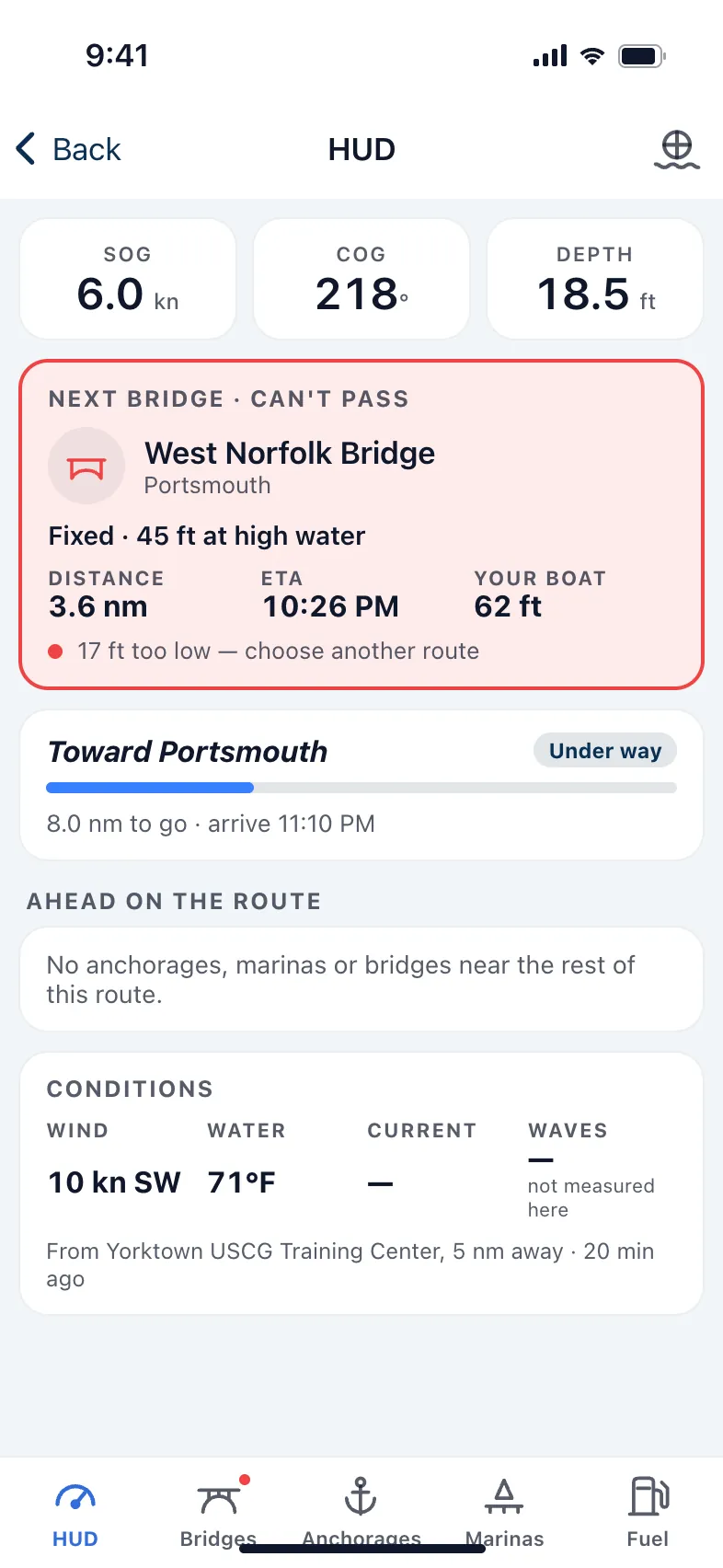
- "West Norfolk Bridge: 17 ft too low. Choose another route."
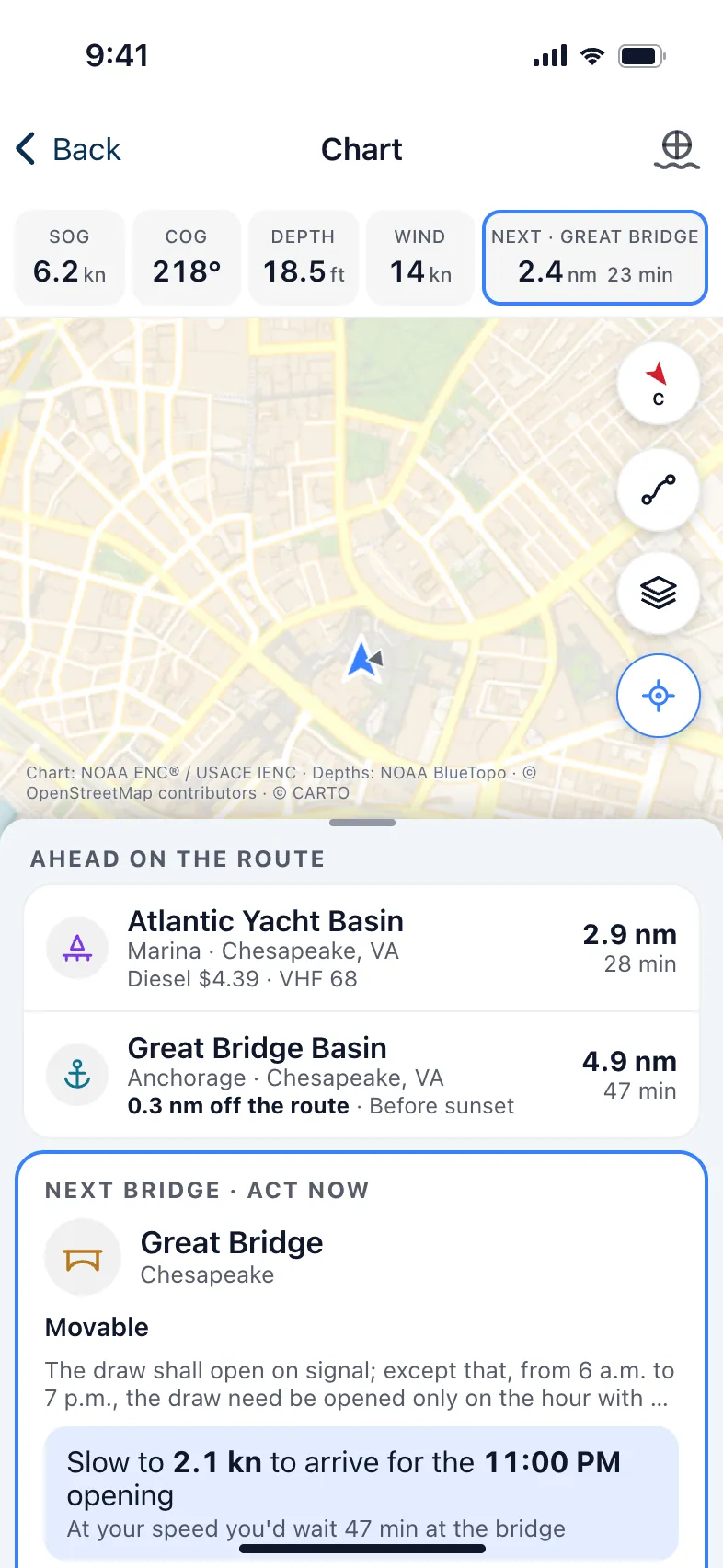
- "Slow to 2.4 kn to arrive for the 10:00 PM opening."
- "A ship will pass 0.2 nm off in 6 minutes."
- "Impeller due in 10 hours."
Every brand, one place
All your gear, on speaking terms.
Boats collect gear from different makers over the years, and it rarely cooperates. Nexus sits in the middle and gets it working together. Use what you love, and let Nexus fill in the gaps.
Radar on any screen
A radar usually shows only on its own maker's display. Nexus reads Garmin, Raymarine and Navico radar and puts it on any phone or tablet aboard, under your anchor chart too.
Any route, any autopilot
Plan a route in Nexus, autorouted or drawn by hand, or import one from your favorite navigation app, and it goes to your autopilot over standard NMEA 2000, whoever made the pilot. You engage the pilot.
Engine data, no gateway
Engine data usually means a $300 to $500 gateway. The Nexus engine node reads the engine's own wiring instead.
Your plotter, still in the loop
Nexus alarms and the man-overboard mark go to your Garmin or Raymarine plotter, so the helm sees what the phones see.
Standard plugs
Nexus joins the boat on a standard NMEA 2000 T and an ordinary Ethernet switch. Where a maker's own plug is the only way in, we'll tell you the cheapest way to make it fit.
Your other apps too
Nexus sends NMEA 0183 over the boat's Wi-Fi, AIS targets included, for any chart app that reads it.
Navigation
Plans the route around your boat.
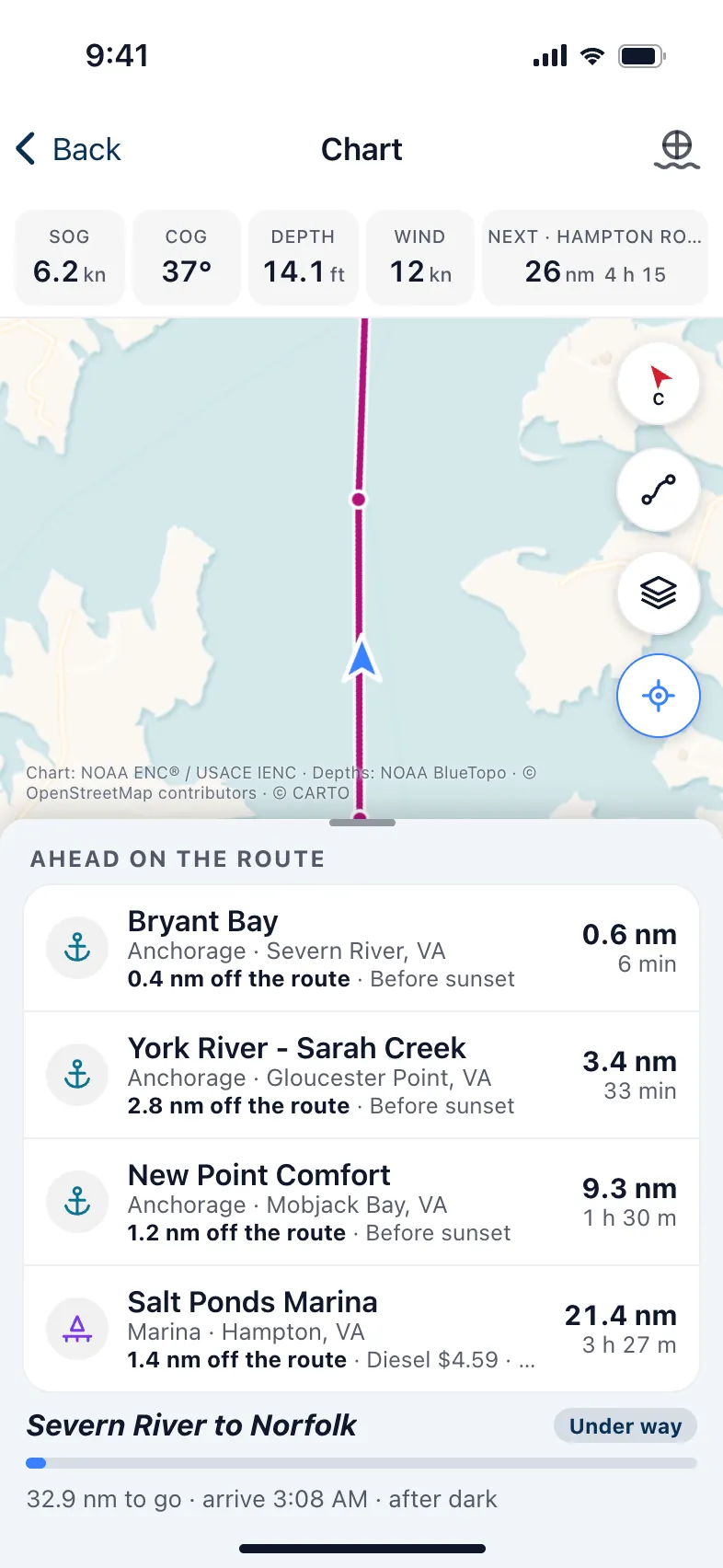
Tell Nexus where you're going. It plans a route that fits your boat and checks it against the chart as you go.
Charts kept on the boat
NOAA charts and Army Corps river charts for your cruising area live on the boat and work with no internet: marks, lights, and the hazards that matter for your draft.
Routes planned for your boat
Autorouting aims for the middle of the channel, the proper side of each mark and the centre of every bridge opening, using your draft and your mast height. Check every route against the chart before you follow it.
Bridges, in time
Bridges that open on a schedule tell you how fast to go: Slow to 2.4 kn to arrive for the 10:00 PM opening. One too low for your mast says so before you get there. Confirm with the bridge tender.
Steers your autopilot
Start a route, planned or drawn by hand, and Nexus sends it to your autopilot over NMEA 2000. You engage the pilot.
Collision warning
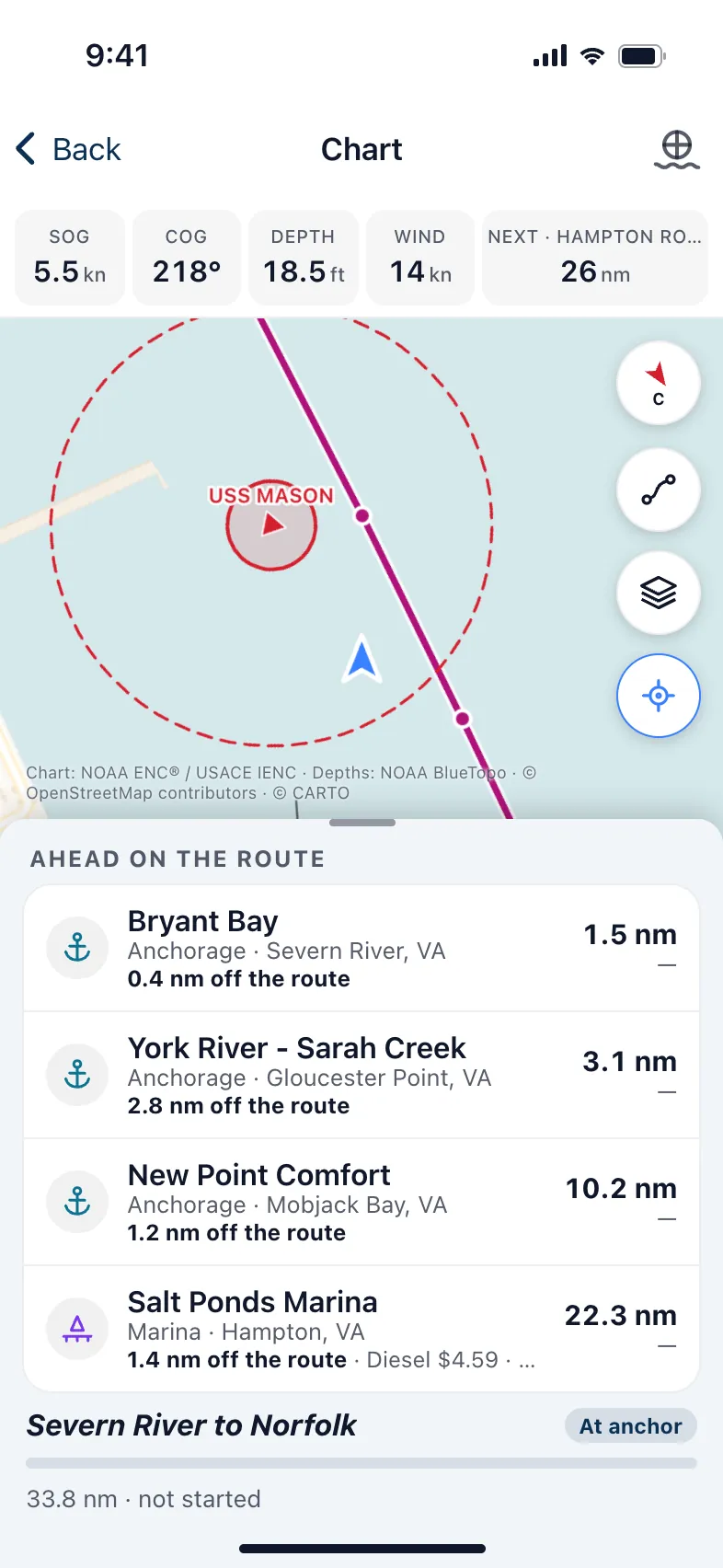
Under way, an alarm when a ship on AIS will pass within half a mile in the next ten minutes (you set the distance), with its course line on the chart.
Watching the boat
Awake when you're not.
Nexus does the watching from the boat itself, so a phone asleep in a pocket ashore still hears about it.
Anchor watch
Set the anchor and Nexus watches it. Dragging, a fence you drew, a ship closing in: the alarm reaches your phone even when it's locked, and on iPhone the anchor sits on your Lock Screen.
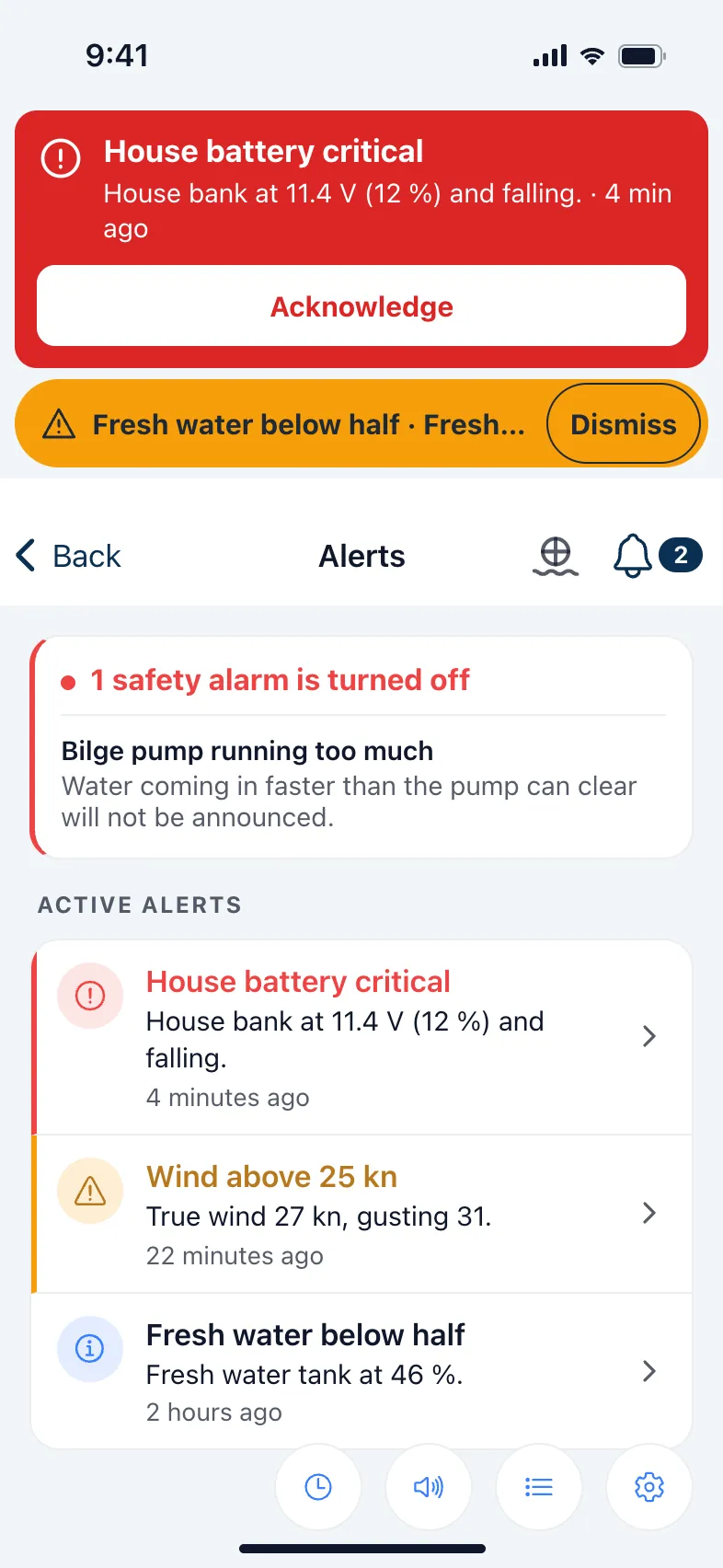
Alarms that say what's wrong
Man overboard, a dragging anchor, rising water with a bilge sensor. Each has its own sound and speaks the problem, so the crew knows without looking.
Man overboard
Hold the lifebuoy on any phone to raise it on every phone aboard. Nexus shows the way back to the mark and to the last position the person's watch reported.
A speaker aboard
Plug a USB audio speaker into the Nexus unit and the alarms sound on the boat as well as on the phones.
On your chartplotter
Nexus alarms show and sound on your Garmin or Raymarine plotter, and the man-overboard mark goes there too.
The whole boat
Everything aboard, in one place.
Your instruments
Depth, wind, speed, tanks, batteries and engines from NMEA 2000, plus battery monitors and sensors over Bluetooth, on dashboards you arrange.
Two years of history
Every reading kept on the boat and charted on your phone. Nothing copied to a cloud.
Just ask
"Hey Siri, ask Nexus how much fuel is left." Or ask Google on Android. Whether the anchor is holding, what the wind is doing: ask with the phone locked, and keep the conversation going. Nexus answers from the boat's own numbers, aboard or ashore.
Tides and weather
NOAA tides and currents, live buoys, the marine forecast and advisories, and a warning when the barometer drops fast.
What's ahead
Anchorages you'll reach before dark, marinas with their VHF channel, and fuel ahead on the route, cheapest or nearest.
Alarms you set
Your own rules on any reading: the fridge warming up, a tank getting low, the batteries falling overnight.
The ship's log
The boat keeps its own log.
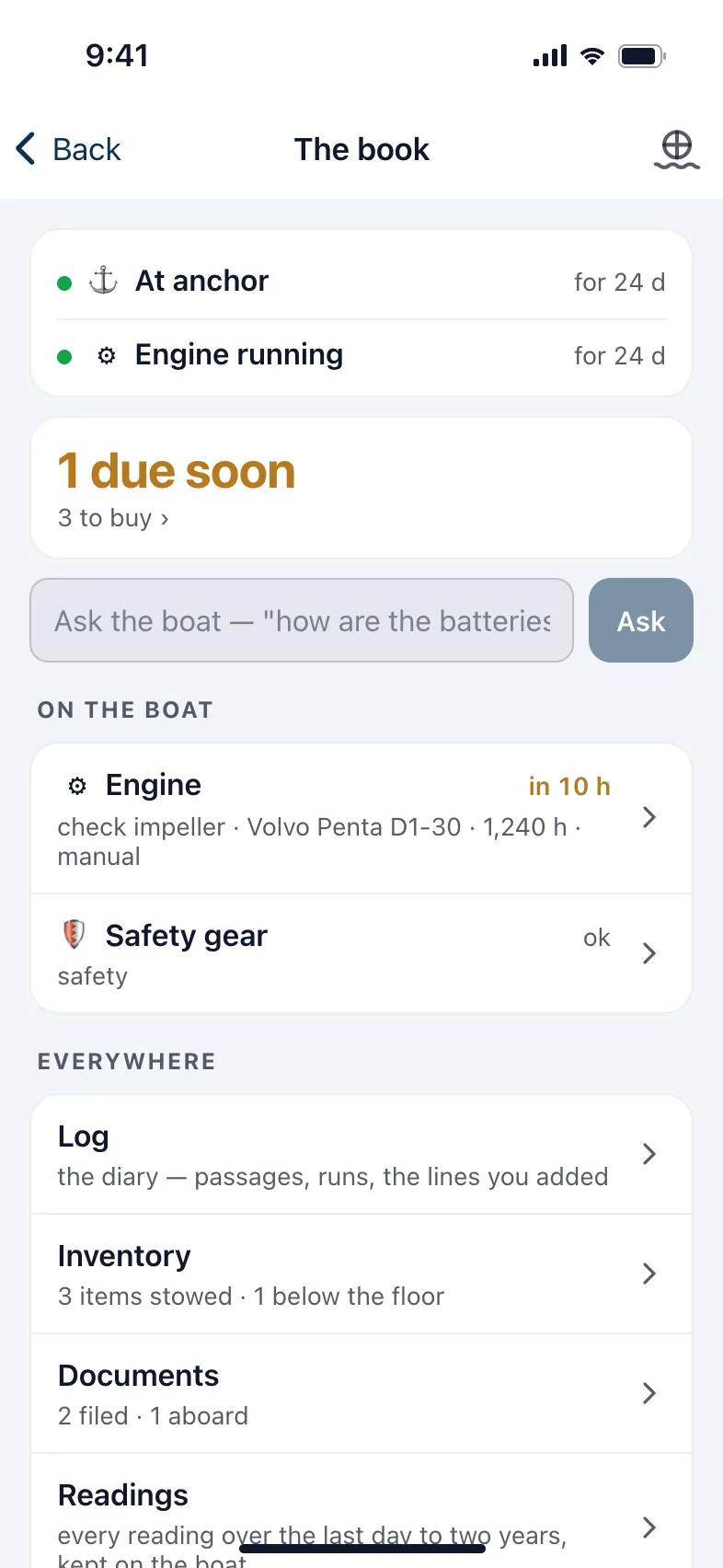
Passages, anchorings and engine hours are written by the boat as they happen.
Maintenance from the manual
Upload your engine's manual and Nexus reads it into a schedule, works out what's due from the real hours, and lets you tick it off.
Papers, spares and safety gear
Documents and expiry dates, what's aboard and where, and a reorder point for the spares you can't run out of.
Kept on the boat
The log lives on the boat. A copy in the cloud, so you can read it from ashore, only if you turn it on.
Sharing
Share the trip, not where you keep the boat.
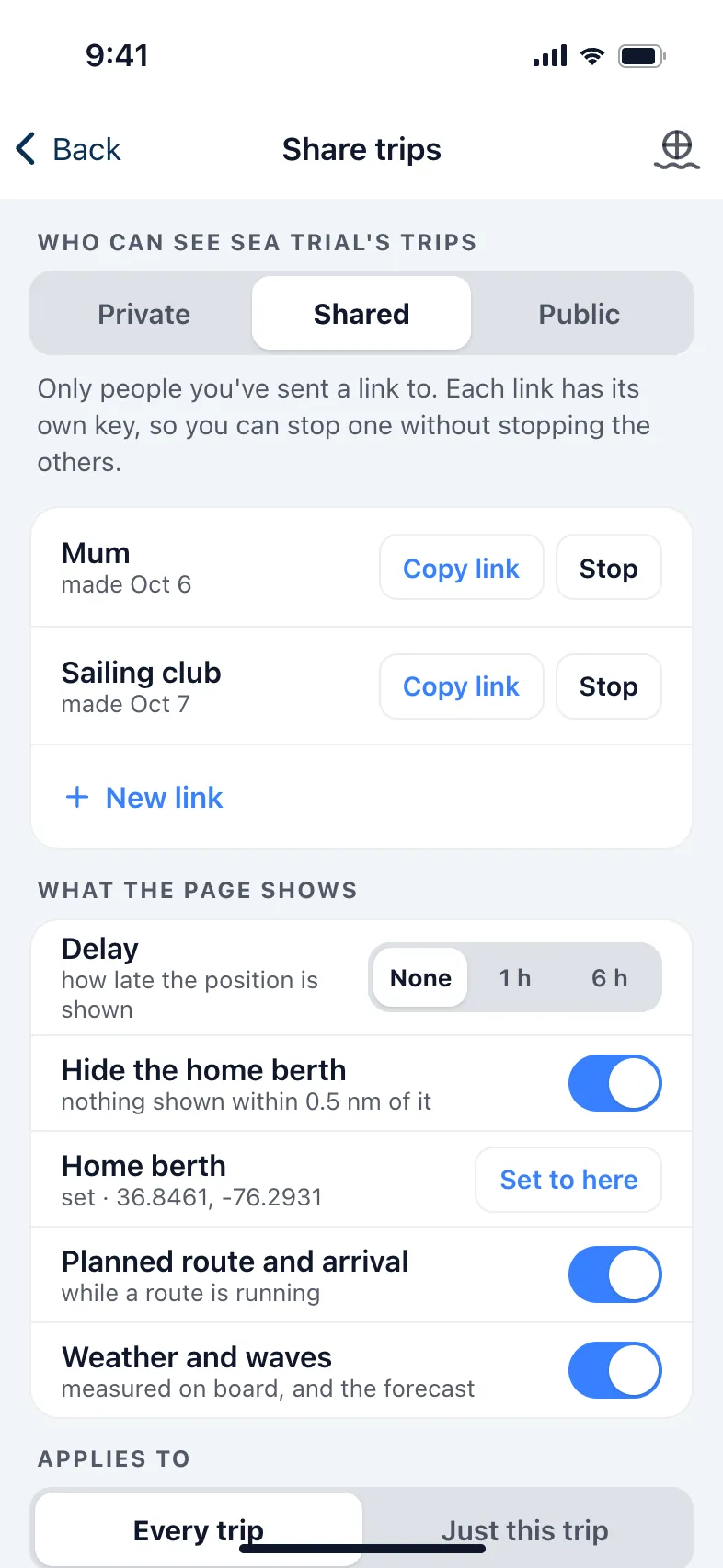
Send family a link to follow the passage on a map, with the wind and the waves along the way. Or make the boat public for anyone.
A link for each person
Stop one link without stopping the others. Private until you choose.
Your home berth stays hidden
Set your home berth and nothing within half a mile of it is shown. Add a delay of an hour or six if you like.
How it works
Nexus lives aboard.
The devices you already have.
The phone in your pocket, the tablet at the helm, the watch on your wrist. The whole boat on the big screen, and the alarm where you'll feel it.
The Nexus unit
Joins the boat's NMEA 2000 network, reads every instrument, keeps the charts and does the watching. It runs its own Wi-Fi for the crew.
On the boat's Wi-Fi
Phones, tablets and watches aboard talk to the unit directly. No internet needed, at sea or in the marina.
From anywhere
Ashore, the app reaches the boat through our servers over whatever internet the boat has: marina Wi-Fi, your hotspot, or Starlink. The Cloud is the one part with a fee, planned at about $30 a year.
Live readings pass through to your phone without being kept. What we do keep, such as alarm records, the log copy if you turn it on, and trips you share, is set out in our privacy policy. Like any chartplotter, Nexus doesn't replace official charts, safety equipment or a good lookout.
Hardware
Small devices for the jobs that need wires.
The hardest thing on a boat is running wires. We're building a few small devices that do the job and report by radio.
The Nexus unit
The computer aboard: NMEA 2000 in, the boat's own Wi-Fi out, the charts on board.
More about the unitEngine node
Reads your engine's own data from its wiring harness. No $300 to $500 gateway.
More about the engine nodeBilge monitor
Knows when the pump runs more than it should, without getting in the pump's way.
More about the bilge monitorQuestions
What people ask us.
Do I need internet on the boat?
No. Charts and routes for the areas kept on the boat, the alarms and the log all work on the boat's own Wi-Fi with no internet. Internet lets you see the boat from ashore and reach a phone that's off the boat.
Which devices does it work on?
iPhone and iPad, and Android phones and tablets, with apps for Apple and Android watches for the crew's wrists.
Will it work with my instruments?
Anything on NMEA 2000, from any brand, plus Bluetooth battery monitors and sensors. Radar from Garmin, Raymarine and Navico.
Does it replace my chartplotter?
It can, but it doesn't have to. On a boat without one, your phones and tablets become the chartplotter. On a boat with one, Nexus works alongside it, and its alarms and the man-overboard mark show on the plotter too. Use what you love, and let Nexus fill in the gaps. Like any chartplotter, it doesn't replace official charts or a good lookout.
What does it cost?
The app is free, and so is everything Nexus does aboard on the boat's own Wi-Fi. Seeing your boat and getting its alarms from anywhere, through the Cloud, is a small yearly fee planned at about $30. We'll publish the price of the unit with the first boats.
Who sees my boat's data?
We're obsessed with privacy. Your boat's readings stay on your boat, and from ashore they pass through our servers to your phone without being kept. We keep only what Nexus needs to run, like your account and a 30-day record of the alarms we send. Everything else is opt-in: a cloud copy of your log or the trips you share stay off until you turn them on. When a weather or tide service needs the boat's position, it gets the position alone, never your name or email. No ads, no tracking, no analytics. Our privacy policy says exactly what we keep and why.